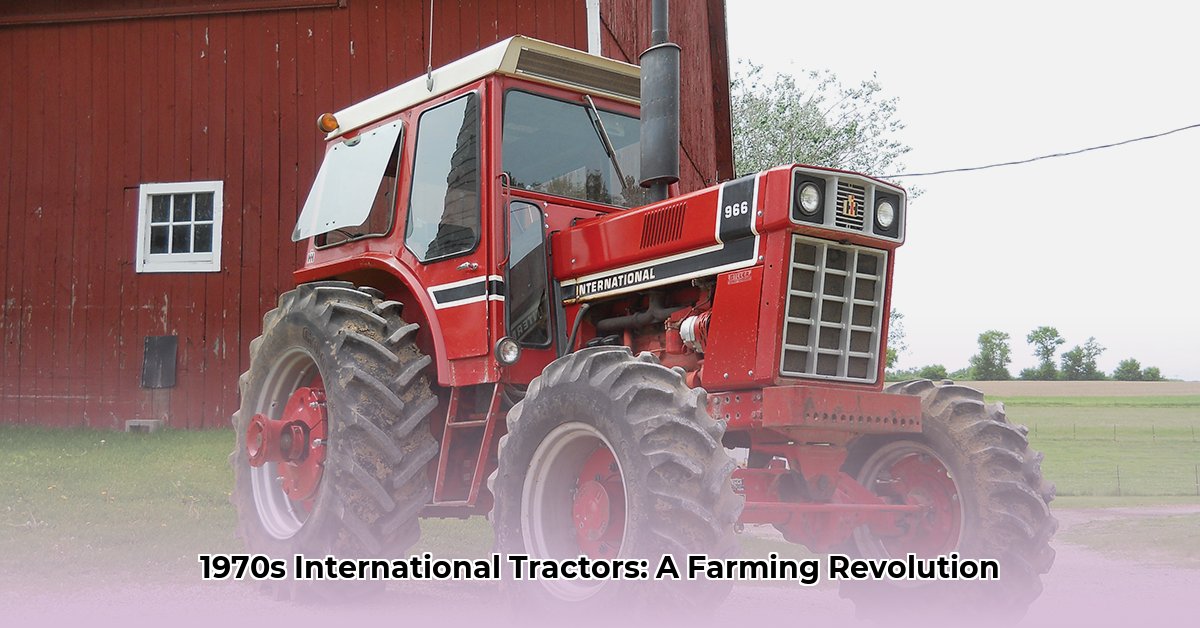
The 1970s: A Turning Point in Agriculture
The 1970s: a decade of iconic fashion, groundbreaking music, and a quiet revolution in American agriculture. While disco ruled the dance floors, International Harvester (IH) tractors were quietly transforming the way the nation farmed. These weren't simply machines; they were symbols of a burgeoning era of agricultural efficiency, paving the way for modern farming practices. How did these behemoths reshape the agricultural landscape, and what lessons can we glean from their impact on sustainability today? This exploration delves into the history of 1970s IH tractors, examining their key models, their impact on farming practices, and their legacy in the pursuit of sustainable agriculture. For more on Farmall tractor history, see this great resource: Farmall history.
The Agricultural Landscape of the 1970s
The 1970s presented a unique challenge: a burgeoning global population demanded more food, while rising fuel costs and evolving societal pressures pushed for greater efficiency in farming. Traditional methods struggled to keep pace. This created fertile ground for the innovations of International Harvester, a company responding to the urgent need for powerful and reliable agricultural machinery. The result? A technological leap forward that fundamentally altered farming practices.
Key International Harvester Tractor Models of the 1970s
International Harvester didn't simply offer one tractor; they offered a range of solutions tailored to diverse farming operations. The most prominent models from this era include:
The 1466: This workhorse, boasting over 140 horsepower (a significant output for the time), was a giant in the field, ideal for large-scale operations and heavy-duty tasks like plowing and tilling expansive acreage. Its robust construction mirrored the demands of its era.
The 966: A more maneuverable alternative, the 966 (approximately 90-100 horsepower) provided a powerful solution for smaller farms or those requiring greater versatility in their operations. Its adaptability made it a staple across various farm sizes.
The 1066: Often described as a happy medium, the 1066 balanced power and maneuverability, offering a reliable solution for a wide range of farming tasks and farm sizes. Its popularity is a testament to its adaptability and efficiency.
| Model | Horsepower (Approx.) | Key Features | Ideal Applications |
|---|---|---|---|
| 1466 | 140+ | High horsepower, robust construction | Large-scale farming, heavy-duty tillage |
| 966 | 90-100 | Maneuverability, versatility | Smaller farms, diverse tasks |
| 1066 | 100-110 | Balanced power and maneuverability | General-purpose farming |
These tractors represented significant advancements in hydraulics and user-friendly controls, making them more efficient and easier to operate than their predecessors. Did these innovations impact farming practices as dramatically as expected?
The Impact on Farming Practices: Efficiency and Productivity
The introduction of these powerful tractors drastically altered farming practices. Farmers could now cultivate larger areas, accelerate planting and harvesting cycles, and dramatically improve yields. The shift from animal-powered equipment to these mechanical giants represented a profound change, leading to increased efficiency, productivity, and, consequently, greater food production. "The 1466, in particular, was a game-changer," recalls farmer John Miller of Iowa. "It doubled our output, allowing us to manage more land with the same labor force." This impact extended beyond individual farms, shaping the broader agricultural landscape and making larger-scale operations increasingly viable. But did this increased productivity have any unintended consequences?
Environmental Considerations: A Retrospective View
While sustainability wasn't a primary concern in the 1970s, analyzing the environmental impact of these tractors offers valuable insights. Compared to modern equipment, their fuel efficiency was lower, and greenhouse gas emissions were significantly higher. However, this must be viewed within the context of their time; they represented a step towards the more environmentally conscious designs of today. They spurred progress, but how are their lessons helping shape modern sustainable agriculture?
Legacy and Future Implications: The Path to Sustainable Agriculture
The legacy of International Harvester, now Case IH, continues to influence agricultural technologies. The principles of robustness, efficiency, and adaptability embedded in these 1970s tractors remain deeply relevant. The current challenge lies in balancing the need for powerful machinery with the urgent need for sustainability. Modern Case IH tractors incorporate advanced emission control systems and precision technologies, demonstrating a commitment to reducing environmental impact. Innovation continues, with advancements in fuel efficiency and alternative fuel exploration paving the way for a greener future.
Actionable Steps for Sustainable Farming Today
Invest in Modern Equipment: Newer Case IH tractors significantly reduce emissions through advanced technologies. This improves fuel efficiency and helps meet sustainability goals.
Prioritize Equipment Maintenance: Regularly maintaining your tractors ensures optimal performance, reducing fuel consumption and emissions. Proper care can yield significant environmental benefits.
Embrace Precision Agriculture: Utilizing GPS-guided machinery and variable-rate technologies minimizes input waste (fuel, fertilizers, pesticides), resulting in a smaller environmental footprint.
Explore Alternative Fuels: Supporting research and development of biofuels and other alternative fuels can contribute to a more sustainable agricultural future. This area is critical for long-term sustainability.
These steps highlight how the lessons learned from the past can inform and guide us toward a more sustainable future in agriculture. The 1970s International Harvester tractors serve as a reminder of the rapid advancements in agricultural technology and the ongoing pursuit of a balance between progress and environmental responsibility.